Decisions to make early
Material grade, sheet thickness and bend geometry influence how a part is made. Identify critical holes, mating surfaces, visible faces and any welding or finishing requirements.
 Let’s talk
From a flat sheet to a functional assembly.
Sheet metal parts need a coordinated approach to cutting, bending and joining. We work through the part geometry, material and assembly requirements for your application.
Discuss this service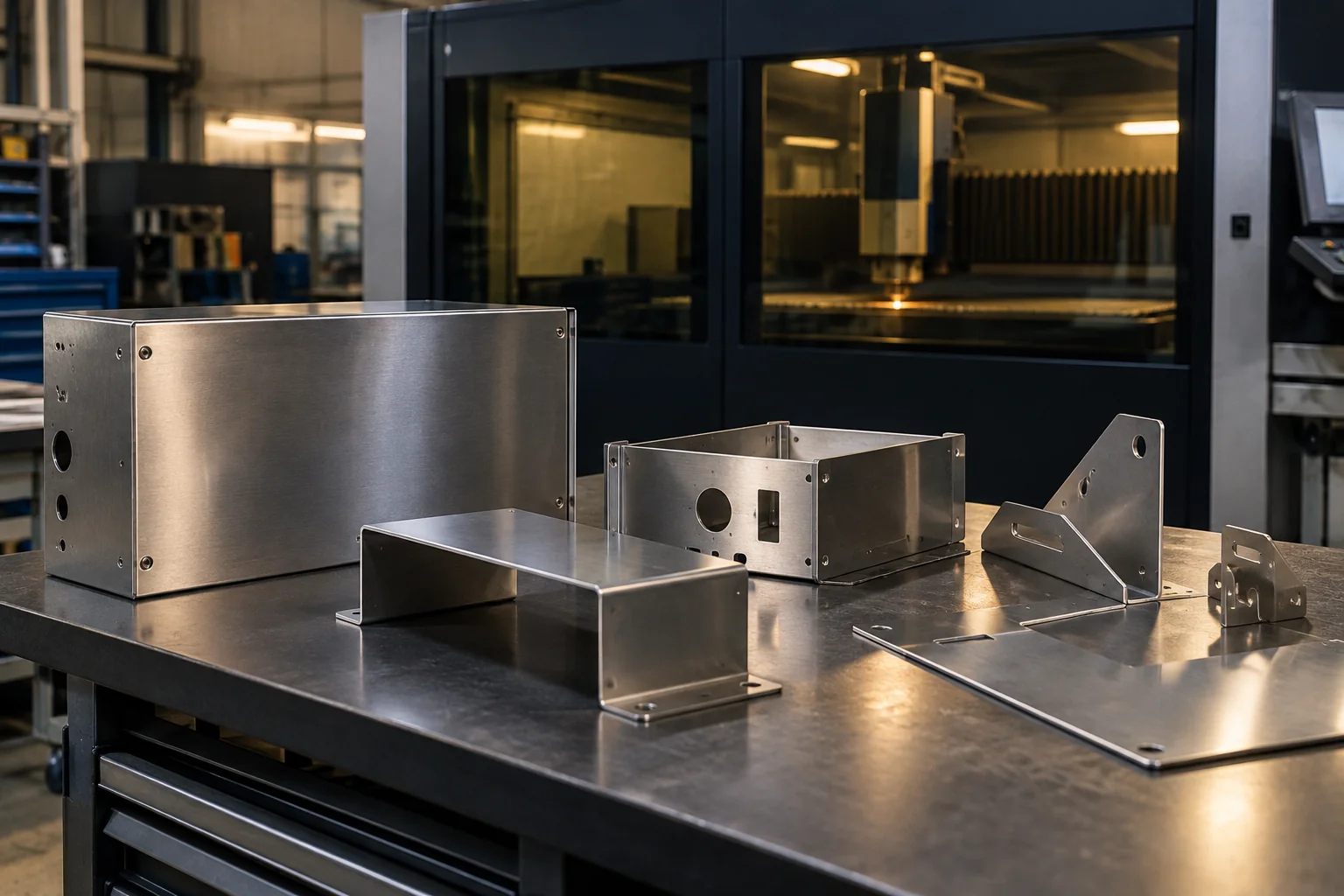
Explore the processes relevant to your project. The final scope is agreed after a technical review.
Brackets, folded panels, housings, guards and multi-part sheet metal assemblies.
Material grade, sheet thickness and bend geometry influence how a part is made. Identify critical holes, mating surfaces, visible faces and any welding or finishing requirements.
Agree the drawing revision, material, quantities, finish and inspection points, including which dimensions apply before or after finishing.
Share a dimensioned drawing or CAD model, material grade, thickness and quantity. Mark critical fits and identify the required finish. If a flat pattern is available, include it with the formed-part drawing.
Include it in the initial brief. Coating, masking, visible surfaces and assembly fits can affect hole sizes, joining and the sequence of operations.
Drawings or CAD files, material and thickness, finish and quantities.
Technical scope, material suitability, tolerances, inspection criteria, pricing and timing are confirmed after reviewing your requirements.
Your project may need design, fabrication, finishing and assembly together. Include the complete requirement so each step can be considered in context.
Explore all services